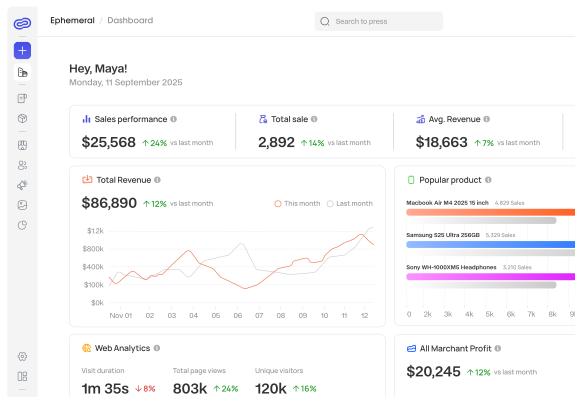
A simple guide to spotting patterns in sales cycles using visual analytics.
High-converting products are rarely the result of luck. They follow consistent behavioral, performance, and engagement patterns that show up long before the product becomes a bestseller. When analyzed clearly, these signals help ecommerce teams understand what customers actually want and what’s worth scaling.
Below is a breakdown of the most reliable patterns that quietly shape whether a product takes off or stays average.
High-converting products often start with short, sharp increases in interest small spikes in page views, add-to-cart activity, or click-through rates. These aren’t dramatic surges, but subtle movements that repeat across multiple days.
They’re signals that customers are curious, not random noise. Ailoom surfaces these micro-trends automatically so teams can act on early momentum, rather than discovering success weeks later.

Across thousands of ecommerce sites, one pattern is consistent:
Products that convert well tend to have the least friction in the buying experience.
A few indicators:
High-converting products minimize decision stress. Ailoom identifies drop-off points so teams can see where friction costs them sales.

A product isn’t truly high-converting because it had one successful day.
What matters is consistency — repeated performance across:
Ailoom highlights these recurring patterns to help teams separate temporary hype from long-term winners.
High-converting products aren’t accidents — they follow recognizable patterns that appear early and repeat consistently. When teams have clean analytics and AI-driven insight, these signals are easier to see and act on.
Ailoom helps uncover these patterns automatically, giving ecommerce teams a clearer path to understanding what works and scaling the right products at the right time.